

You research an overseas employer in three moves: check the business registration, confirm the offer with the company itself, and look up the agency's license. These three checks take one afternoon and can catch most bad offers before any money leaves your account.
Even so, many people skip these basic checks because a friendly recruiter can seem trustworthy. A warm conversation on the phone may feel reassuring, but it doesn't prove that the job or employer is genuine. At Arizona Observatory, we hear from readers in Phoenix and Tucson who paid processing fees for jobs abroad that never existed.
That’s why it’s important to verify the details yourself before moving forward. And a few simple checks can reveal problems with the employer, recruiter, or job offer. This guide will explain how to check business and licence registers and compare the job offer with the final contract.
Due Diligence on Registration: How to Confirm an Overseas Recruitment Agency Is Licensed
Many companies that promise overseas jobs don't have a valid government licence. In most countries, you can check an agency's registration in a public database, often for free. Spending 15 minutes on this search can help you tell a legitimate agency from a fake one.
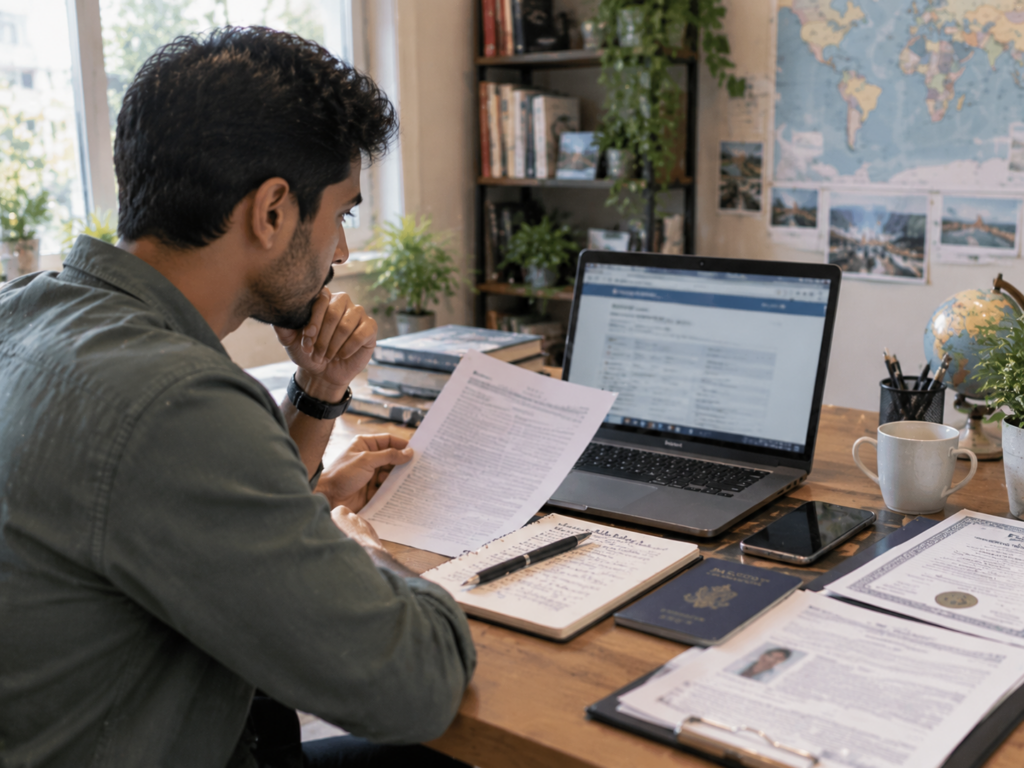
Two checks do most of the work here. Both involve documents that a legitimate agency should be willing to provide without hesitation.
Checking Government Licensing Databases for Recruitment Agents
Every country that sends workers overseas keeps a public register of licensed recruitment agencies.
India, for example, lists licensed agents on the government eMigrate portal, while the Philippines has a similar database for migrant workers. Checking these records should be your first step because it tells you whether the agency is legally allowed to recruit workers.
Once you find the register, search for the agency's registered name, not the trading name shown on its brochure. Scammers sometimes copy the name of a licensed company and change one small detail. That's why you should also match the licence number with the official record. A quick name search can miss these differences and lead you to the wrong company.
Expiry dates deserve the same care, because a lapsed license reads exactly like a live one. We have reviewed papers where the license ran out two years before the recruiter started taking fees.
One more limit to watch: a license approved for one country never covers jobs in another, and selling work without that cover is illegal recruitment.
Does the Company Have a Verifiable Business Address in the Destination Country?
Yes, a real employer should have an address you can confirm through more than one source.
Start by checking the address in the country's company register. Then see whether the same address appears on the employer's website and in mapping tools. If the details don't match, take a closer look before moving forward.
Phone numbers get the same treatment. A fake company may list a virtual office or a number that nobody answers. Instead of using the number in the job offer, call the switchboard listed on the employer's official website and ask for the person who signed your offer. This will give you a direct way to check whether they actually work there.
However, the check we would run first is the email domain. Recruiters writing from free webmail have no company payroll behind them. So be cautious if a recruiter contacts you through a free email service instead of a company email address. You can also check when the company's email domain was registered.
Basically, anything under a year old earns a hard second look (a five-dollar domain buys a lot of false confidence).
Why Do Overseas Job Scams Target Job Seekers So Often?
Distance and unfamiliar laws make an offer hard to check, and that gap is the whole appeal for a fraud ring. After all, someone in another time zone can promise anything, because you can't walk into the office and ask for the hiring manager.

Four reasons explain why job fraud keeps circling back to people looking for work abroad:
- Distance Blocks Checks: Visiting a worksite 8,000 miles away costs more than most applicants have, so they trust the paperwork instead.
- Unfamiliar Rules Create Cover: Foreign employment laws aren't always easy to understand, especially when it comes to fees. A scammer can take advantage of that uncertainty by inventing charges for permits, medical checks, or other costs.
- Big Pay Figures Silence Doubt: Triple your salary sounds too good to be true. Yet an offer like that with no interview still pulls thousands of replies.
- Job Boards Widen the Reach: Public job boards give scammers access to a large pool of applicants at little or no cost. They only need a few people to respond before the scam can become profitable.
The pattern holds across borders. Recruitment scams sell jobs that don't exist, and they run on urgency rather than skill. Losses are not small, either: people reported more than $10 billion in fraud losses to the US Federal Trade Commission in 2023.
Generally, taking a week to check the employer and offer before paying anything can give you time to spot problems and step away from the pressure. In serious cases, that extra time may also help you avoid recruiters connected to human trafficking.
How to Verify a Job Offer and Spot a Fake Job Offer
Real offers come with a signed employment contract, a work visa filed in your name, and no upfront fees. A fake job offer relies on screenshots and promises that the papers will follow once you pay.
Set the two side by side, and the gaps stop looking like small slips:
| Document | Genuine offer | Fake offer |
|---|---|---|
| Contract | Signed, with salary, hours, and end date | Unsigned file or a chat message |
| Visa | Employer files a work visa in your name | Suggests you travel on a tourist visa |
| Fees | Employer pays hiring costs | Requests money for training or processing |
| Contact | Company domain email and switchboard | Free webmail and a messaging app |
Bottom line: one mismatch in that table should be enough to make you stop and check, while two or more can be a strong sign of fraud. Vague job titles, limited job details, and a missing contract are all warning signs worth taking seriously. Keep every file the recruiter sends you, too. These records can provide useful evidence if you need to report the scam.
Protecting Your Money and Personal Information From a Recruitment Scam
Protect your money and personal information from the first email. A real employer shouldn't need your passport scan, bank login, or a deposit before you have a signed contract. Once you've handed over money or sensitive information, it can be difficult to get it back.
Here's how you can protect both before a scammer gets the chance to use them.
Never Pay for Job Placement Fees or Visa Scams
Legitimate employers usually cover recruitment costs, so be careful when an agent asks you to pay for a job. An early payment request is one of the clearest signs that something may be wrong.

The payment method can also reveal a scam. Scammers often ask for wire transfers, gift cards, or cryptocurrency because you may find it difficult to reverse these payments (banks cannot claw back a wire, however nicely you ask).
Card payments and transfers to a named business account give you more options if something goes wrong. Before you pay, ask why the fee is required and confirm the charge with the employer.
Protect Your Passport and Personal Information
Documents deserve the same caution, because a scan travels further than money does. We have seen a single passport scan reused to open accounts in a victim's name months later.
So send certified copies only after the employer checks out, and read the privacy policy on any recruitment portal before you upload a thing.
If money has already left your account, act quickly, as delays can make it harder to recover. Call your bank within 24 hours, then file a police report at home.
You should also report the agency to the government body that regulates overseas recruitment. Even if you can't recover your money, your report could help protect other job seekers from the same scam.
Take These Steps Before You Accept Any Overseas Job Offer
These scams survive on applicants who check nothing, and the checks that stop them take one afternoon. A valid licence, a confirmed address and a signed contract can answer many of the questions you need to ask.
Run all three before you send a single document or dollar, and ask the employer directly when something looks thin. Flagging a suspicious job ad to the board that carried it will help the next reader get a warning instead of a bill. Remember, any offer that can't survive a check was never a real opportunity.
Arizona Observatory publishes practical guides for people weighing work abroad. Contact us if you want a second pair of eyes on an offer.