

Students can position themselves for successful overseas placements by building the right skills, understanding visa requirements, and targeting countries with strong internship programs. These preparations are significant because graduating students face intense competition in saturated local job markets, which makes quality roles harder to secure.
Here, international placements offer you a different route, like working abroad. It helps you open doors to opportunities that you can't find domestically. However, the process requires different preparation than the typical job search strategies you'd use at home.
This guide walks you through those processes from understanding what makes overseas student placement unique to finding paid programs and navigating the application process. With these, you'll also learn:
- Which skills actually get you noticed
- How to handle visa paperwork and transfer requests
- Where to find support when obstacles pop up along the way
So, let’s get started.
What Makes Overseas Student Placement Different from Local Job Hunting?
Overseas student placement involves fulfilling visa requirements, cultural differences, and international hiring standards that don't exist in domestic job searches. The timeline here is often longer than students expect, and employers assess candidates differently for overseas roles.
Let us introduce you to these basic elements that help you achieve your overseas placement dreams.
Understanding International Employer Expectations
Adaptability and cross-cultural communication skills often outweigh your GPA in hiring decisions. It's not like your academics don't count. But international employers care more about whether you can handle working independently in unfamiliar environments.
That's why work authorization gets verified early, sometimes before your actual qualifications (after all, there's no point interviewing someone who can't legally work in their country!)
Quick tip: Since these processes involve multiple steps, expect longer hiring timelines, with several stakeholders coordinating across different time zones.
Documentation Requirements Beyond Your Resume
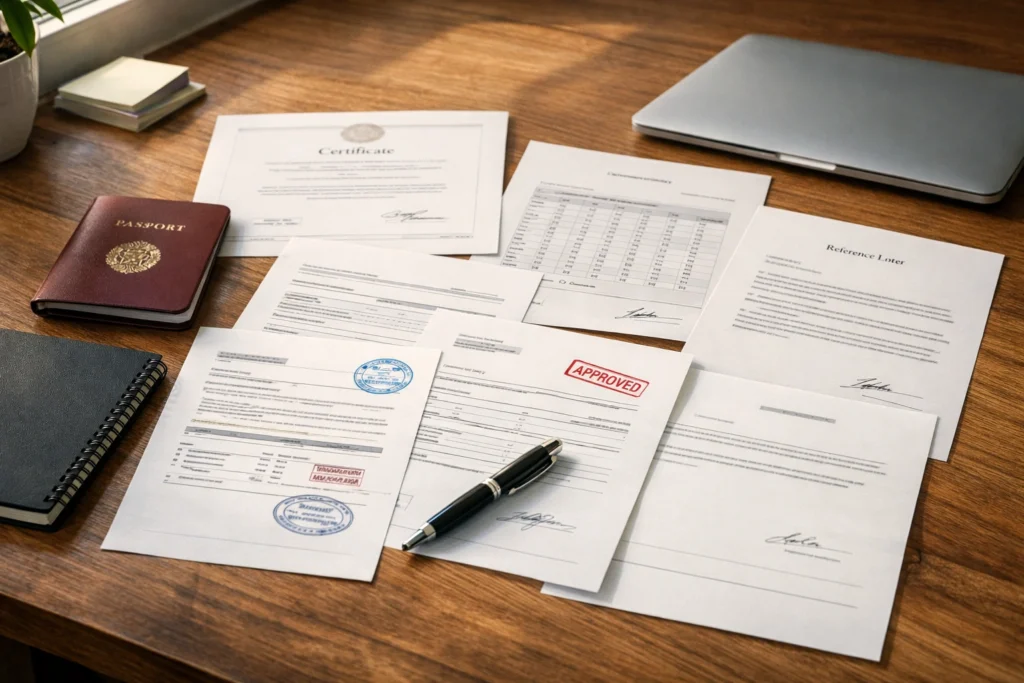
Police clearances, apostilled transcripts, and health certificates vary by your destination country. And some schools and programs require extensive background checks that take weeks to process.
Beyond all these documents, your reference letters should specifically mention your ability to work independently abroad. Besides, language proficiency tests like IELTS become mandatory even if you studied in English your entire life.
Cultural Fit and Language Considerations
Workplace norms differ dramatically depending on where you're applying. Germans value directness, while Japanese professionals prefer subtle communication styles. Even Australia and the UK have business etiquette that'll surprise American graduates. Sometimes, it differs from how you address supervisors to what counts as appropriate meeting behavior.
Frankly, although everyone speaks English, a different communication style at work can feel like you are learning a whole new language. In this situation, using basic phrases in the local language shows you're invested before you even arrive.
Building Your Profile: Skills That Get You Noticed for Student Placement
The right skill set makes you stand out to international employers who receive hundreds of applications from students worldwide. Drawing from our experience working with students for years, we've seen that certain abilities consistently catch attention when companies review placements abroad.
Here are the key skills international employers look for:
- Digital Literacy and Remote Collaboration Tools: You need to work seamlessly across continents using Slack, Zoom, and project management platforms without constant supervision.
- Cross-Cultural Experience: Exchange programs or international volunteer work immediately separate your application from purely domestic candidates. In this case, they count even short-term experiences.
- Independent Project Management: Employers want people who can own tasks from start to finish, since you'll work with minimal supervision overseas.
- Problem-Solving over Coursework: In your resume, ditch the course-by-course rundown and highlight how you tackle challenges independently with measurable results.
- Any International Exposure: Include summer volunteering in Costa Rica, even if it’s unrelated to your major, as it demonstrates adaptability.
Bottom line: Focus your resume on transferable skills and real-world experience rather than listing every class you passed. International positions value what you can do over what you studied.
Best Countries for Paid Internships and Work Placements
Now, you may question, "Which countries actually pay interns well and offer pathways to longer-term opportunities?"
The answer depends on your department and what you're hoping to get from the experience. However, some destinations consistently offer better programs and support for students looking to work abroad.
Let's have a quick look at the top destinations for student placements:
- United States: Pays top dollar and offers incredible industry connections through J-1 visa programs. Even if you get the visa later, you'll need employer sponsorship at the start. And the process can get competitive simultaneously.
- Canada: After your internship ends, you can apply for permanent residency through post-graduation work permits. And it's a wise choice if you're thinking long-term career moves
- Australia: Working holiday visas allow you to earn money while experiencing life in cities like Sydney or Melbourne. For eligible citizens, they also offer decent pay and a more relaxed application process.
- Germany: This country provides paid opportunities with reasonable living costs (rent in Berlin beats London prices). Plus, their strong engineering and tech sectors are actively recruiting international talent.
- Singapore: Singapore’s tech and finance sectors continue to expand and actively recruit fresh international talent. These industries also offer competitive salaries within a global business hub.
Pro tip: Start researching visa rules now, since some countries cap your work hours during placements. You do not want to get accepted and then discover you cannot legally work enough hours to cover living costs and travel expenses.

The Job Search Process: From Application to Offer
Getting your application right from the start saves months of rejection emails and missed opportunities. And you need to do it right, because international employers handle hundreds of applications from students. So, your small mistakes can knock you out before anyone reviews your actual qualifications.
The next section focuses on how to prepare applications that meet international employer expectations and stand out for the right reasons.
Preparing Applications for International Employers
American resumes look completely different from European CVs (Format is more important than you might think). For instance, a US resume stays tight at one page, while European CVs often run two pages with more personal information.
In your resume, show results with numbers instead of describing what you did at your campus job. Plus, mention your work authorization status upfront so automated systems don't reject you immediately.
Managing Transfer Requests and Visa Paperwork
Once your offer letter arrives, the visa process begins straight away. This is not the stage to slow down.
Sometimes, embassies and consulates need time to review applications, and delays are common. In this situation, you shouldn't wait too long to gather documents, as it can easily disrupt a placement before it even starts.
To stay organised, store all required documents in cloud storage. This makes it easy to access files quickly during the application process, especially if you need to submit or resend paperwork on short notice.
Preparing for Cross-Border Interviews
Video interviews are often used for early screening before companies move candidates through to final meetings. In this format, technical glitches and awkward pauses feel more noticeable, so preparation needs a different approach.
Most importantly, schedule your interview when you're sharpest (not at 2 AM to accommodate their timezone). During the interview, ask about relocation support and what help you'll get settling into a new country upfront.
Negotiating Offers and Understanding Compensation Packages
If an offer comes with a $50,000 salary, avoid celebrating too early. The number only makes sense once you account for local taxes and rent in the city where you will live.
It’s also worth asking about additional support during the interview. Because housing assistance and flight reimbursement are sometimes included, but they are rarely offered unless you ask.
Finally, you should also confirm if the internship can lead to a full-time role or a pathway to long-term residency.

Common Roadblocks Students Face (And How to Overcome Them)
Many students abandon overseas placement plans after hitting the first major obstacle. Most of these challenges are manageable, though. Especially when you know what roadblocks to expect and plan for them early, before they disrupt your search.
Below are some of the most common roadblocks students face when planning overseas placements, along with practical ways to work around them.
Financial Barriers: Finding All-Expense Paid Internships Abroad
Government programs like Fulbright cover everything from flights to housing for qualified students who meet their requirements. Occasionally, tech giants and consulting firms also reimburse relocation costs and provide monthly stipends. This saves you from draining your savings just to gain experience.
Believe it or not, scholarship databases exist specifically for international work placements (start searching 8 months early). But many students never find these opportunities because they assume all abroad programs cost money.
Getting Your First International Experience When You Have None
Virtual internships let you work for London-based companies without leaving your apartment (the classic need-experience-to-get-experience paradox everyone faces). Even a two-week volunteer program in Ecuador builds your cross-cultural resume quickly.
Here’s something many students overlook. Your university career center probably has partnerships you don't know about yet. Schools also maintain connections with alumni working abroad who specifically want to help students from their program enter the international job market.
Timing Your Search for Summer 2026 Placements
If you are aiming for summer 2026, applications should begin by fall 2025. Because visa processing alone can take months, and you can't even rush that month. Besides, many competitive programs set deadlines close to a year in advance for summer placements. That means waiting until spring often lets you miss most available opportunities.
Even programs with rolling admissions tend to fill strong positions quickly. That's why applying early gives you more flexibility, along with secure housing, and resolves any visa issues well before your start date.
Your Next Steps Toward Landing That Placement
Update your CV today using international formatting standards for your target countries. Because the wrong format costs you opportunities before anyone reads your qualifications.
You can also connect with students who recently completed placements abroad to ask about their actual experiences. Besides, your alumni can provide you with honest information about what programs truly deliver versus which ones oversell.
In this case, professional placement agencies like Arizona-Observatory can speed up your search when you're ready to explore global job markets. So, contact our consultants to learn how we can support your journey toward working abroad.