Wondering what skills you'll need to land a teaching job abroad in 2026? You're in the right place.
This guide will show you the global teacher skills that international schools and universities actually want. You'll also learn about global competence, digital learning, and why lifelong learning is now a top priority in an interconnected world.
With a global teacher shortage creating demand for skilled educators, teachers who build these skills now are setting themselves up for success. So if you want similar results, read on to learn what global schools are looking for in the right way.
What Are Global Teacher Skills?
The right skills open doors to teaching jobs around the world. And when we talk about global teacher skills, we mean the abilities that help you work with diverse students, connect across cultures, and collaborate beyond your classroom walls.
So what exactly are these skills? Let's go through the skills list one by one.
Global Competence in the Classroom
Global competence is the ability to teach across cultures and worldviews. Because of this, teachers connect with diverse students and bring global issues into the classroom.
You might be wondering what this looks like in practice. Well, teachers with this skill can guide students to see beyond their hometown and engage with the world around them.
Cultural Awareness and Communication
Teachers who learn cultural awareness build stronger relationships with students and families from all backgrounds. This skill helps you connect on a deeper level than surface-level knowledge ever could.
This kind of connection goes beyond holidays and traditions. It develops when you learn to adjust your teaching style for students from different walks of life. That's the reason many international schools now test teachers on cultural sensitivity during interviews.
Collaboration Across Borders
Cross-border collaboration is becoming the norm in education. A teacher in Texas can now co-plan lessons with an educator in Tokyo, which helps students gain a wider view of the world.
Virtual tools make this teamwork easy, even from your own classroom (and yes, we've all sat through those awkward Zoom calls with a 10-second delay).
Despite the small hiccups, the learning benefits are hard to ignore. Because of this, schools actively seek teachers who build international networks and bring fresh ideas back to their community.
Digital Learning and Personalized Teaching
Technology is changing how teachers teach and how students learn. And naturally, schools now expect educators to pick up new skills in digital learning and personalised teaching. These abilities help you use AI tools, adjust lessons for different learners, and make proper use of student data to help them in learning.
Read on to see how each skill works.
Technology as a Teaching Partner
Digital learning means using new technologies to support teaching, not replace teachers. Think of tech as a partner that handles the small stuff so you can focus on the concept.
Let's be honest here. Tech might not be every teacher's thing, but schools expect basic fluency now. That's why UNESCO's AI competency framework for teachers outlines what educators need to know about AI tools. And by 2026, schools expect teachers to feel comfortable using digital learning tools in their daily practice.
Personalized Learning for Every Student
Personalised learning helps every student move at their own pace. This approach taps into project-based learning and creative thinking to meet each learner where they are. In turn, struggling students get the support they need, while advanced learners have room to keep growing.
It's no surprise that teachers with these strategies are in high demand. International schools actively look for educators who can adapt to every student's ability.
Data Literacy for Educators
With data literacy, teachers can identify struggling students early on. This skill helps you read student data, catch learning gaps, and make informed decisions before small issues shift to major ones (and no, gut feelings don't count as data anymore).
Because this ability is so valuable, many training programs now include data literacy as part of their curriculum. For this many training programs now include data literacy as part of their curriculum.
Lifelong Learning for Teachers: How to Stay Ahead
Lifelong learning keeps you current and allows you to adapt as the field changes. Schools know this, and that's why they value educators who keep investing in themselves year after year. This mindset keeps your skills sharp, your knowledge current, and your career on track.
Look at the three habits that help teachers stay ahead.
Professional Development That Works
Lifelong learning for teachers means ongoing training, not just a summer workshop every few years. Real growth happens when learning becomes a regular habit.
Today, the approach looks a bit different. Online courses, micro-credentials, and peer coaching are replacing outdated lecture-style sessions. And when these programs fit your schedule and financial resources, you end up with skills that actually last.
Adapting to Higher Education Trends
Universities are changing how they hire, and skills are being prioritized. This means students need better preparation before they finish school. And teachers are the ones who can give them that head start.
International schools already expect this from their educators. They want teachers who understand higher education trends and can pass that knowledge on. When you do this well, you help students build careers that last.
Building a Growth Mindset
Teaching isn't always smooth, and that's okay. A growth mindset gives you the ability to learn from rough patches instead of being dragged down by them.
This means staying curious about your own teaching. It also means being brave enough to bite the bullet and ask colleagues for honest feedback. Yes, it stings sometimes, but that feedback is fuel for getting better. Schools value educators who welcome change and keep sharpening their skills for the future.
Ready to Grow? Your Next Step Starts Here
The education world keeps evolving, and teachers who don't adapt risk falling behind. Because of this constant change, finding the right skills and opportunities can feel overwhelming. But with the right guidance and resources, landing a teaching role abroad in 2026 is within reach.
This article covered the skills that global schools want most: global competence, cultural awareness, digital learning, personalised teaching, and lifelong learning. These abilities set you apart in a competitive job market and prepare you to teach students anywhere in the world.
And you don't have to figure it out alone. Arizona-Observatory has been guiding teachers toward international roles for 15 years. If you're ready to take your career global, please get in touch with us today.
Recruiting teachers from overseas isn't as simple as it used to be. Visas take longer than they should, relocation costs keep climbing, and there just aren't enough qualified teachers to go around. You might need someone in the classroom by August, but their visa won't come through until October. And when teachers have multiple offers on the table, they'll pick the country that pays more or covers their moving costs.
We understand the frustration. You're competing with districts worldwide for the same limited talent pool while your positions sit empty. And time keeps running out.
Here's what we'll cover:
Visa delays don't match hiring timelines
Relocation costs make candidates withdraw
Special education faces the worst shortages
Proven strategies to fill positions faster
Let's look at what's blocking your overseas teaching recruitment right now.
What Makes Overseas Recruitment for Teachers So Difficult Right Now?
Visa processing delays and fierce global competition make it hard to recruit teachers from overseas. The OECD reports show that most countries keep unfilled positions under 3%, but secondary schools face the toughest recruitment challenges.
Keep reading to explore why that happens.
Visa Delays Push Start Dates Back
Government immigration offices face significant backlogs that push start dates past when school years begin. Schools need teachers by August, but visas arrive in October (and yes, we've watched September start dates turn into October arrivals more times than we can count).
Then there's sponsorship paperwork. Employer checks and skill assessments alone can drag things out by several more weeks.
Global Competition Drives Up Demand
The competition is fierce, and it's happening globally. Districts across Australia, the UK, and North America fight for the same candidates. Teachers with math or science skills get multiple offers at once, which gives them serious leverage.
On the downside, rural schools lose out to urban districts that pay more and offer established immigrant communities nearby.
These timing and competition issues make filling overseas teaching positions feel nearly impossible.
Common Barriers Stopping Teachers from Working Abroad
Teachers avoid working abroad because of financial fears, family obligations, and cultural uncertainty. Let's be real here. Many qualified teachers fear losing pension benefits, health coverage, or career progression by leaving their home country. And, teachers get cold feet once they calculate the real costs of uprooting their lives.
Family considerations complicate things further. Spouse employment, children's education, and elderly parent care make international moves complicated. A teacher might love teaching abroad in South Korea. But what if their partner can't find work? These questions stop many qualified teachers from accepting positions.
Cultural concerns add another layer of hesitation. Language barriers and unfamiliar curriculum standards make even attractive salaries feel risky. Teachers worry about adapting to new teaching methods, building new friends, and feeling isolated from home.
These personal barriers often weigh more heavily than the job offer itself.
Relocation Costs: Why Job Opportunities Fall Through
Job opportunities fall through because relocation packages don't cover the real costs teachers face when moving countries. Schools assume a few thousand dollars handles everything. However, moving internationally costs a fortune when you factor in everything beyond flights.
Let’s have a look at why most candidates back out:
Standard Packages Miss Real Expenses
Shipping household belongings overseas costs $5,000-$15,000, depending on volume. That far exceeds the $2,000-$3,000 schools typically offer. Temporary housing, pet relocation, and storage fees add thousands more from teachers' own savings.
The truth is, schools underestimate setup costs like furniture, appliances, and utility deposits (because somehow everyone forgets about the security deposits and connection fees until moving day).
Currency and Cost of Living Add Uncertainty
And here's where things get tricky. Salary offers sound competitive until teachers calculate what they can buy in cities like Sydney, Melbourne, or Auckland. Exchange rate changes mean salaries lose value upon arrival. Bottom line: teachers worry about supporting families back home while facing higher rent and living costs.
These cost barriers explain why so many candidates back out after accepting positions.
How Does the Global Teacher Shortage Impact Work Abroad Programs?
The global teacher shortage reduces the number of candidates willing to work abroad. UNESCO reports the world needs 44 million primary and secondary teachers by 2030, creating fierce competition for talent across countries. Two specific areas struggle the most:
Special Education Faces Steep Shortfalls
Special education teachers can make more money staying home than moving abroad for similar pay. The real problem? Their training doesn't count in other countries, which means starting the certification process all over again after they arrive.
Based on our 15 years of placing teachers internationally, we've seen this problem worsen. Schools now struggle to fill special education positions at 3 times the rate of general teaching roles.
Rural Districts Lose to Urban Areas
Rural schools offer beautiful locations but lack the cultural diversity expat teachers want. Urban districts provide immigrant networks, international food, and direct flights home that rural areas can't. These advantages push teachers toward cities by default. Candidates willing to try rural life fall through the cracks because districts don't know how to find them.
Between urban competition and missed rural opportunities, the teacher pipeline simply can't keep up with global work demand.
The Main Challenges in Overseas Teacher Recruitment
The hiring process for overseas teaching positions has gotten harder because of visa delays, budget limits, and retention problems. Believe it or not, recent research shows just how much schools struggle to fill positions abroad. These numbers explain why.
Visa processing delays: Approvals take weeks or months, depending on the country. Many miss school start dates entirely.
Candidate withdrawal: Teachers back out after seeing real relocation costs. Schools' budget too low for what moving truly requires.
Special education challenges: These positions take notably longer to fill than general teaching roles. Math and science teachers face similar struggles based on our experience.
Salary expectations: Teachers want premiums for relocating internationally. However, most district budgets can't stretch that far.
Retention concerns: Many overseas teachers head home within the first few years. Cultural adjustment proves harder than expected, and working conditions don't always match what was promised.
These statistics explain why filling teaching positions abroad takes longer than ever before.
What Can Schools Do to Fill Overseas Teaching Roles Faster?
The best part about fixing your recruitment process is that you'll start seeing qualified candidates accept offers instead of backing out. Schools that adjust their approach see better results with international teachers. Here's what works.
Simplify Immigration and Visa Support
Partner with registered migration agents who handle paperwork efficiently and cut processing times in half. This reduces candidate anxiety.
Start visa applications right after making job offers instead of waiting for confirmations that delay everything by weeks. Then, provide clear timelines and regular updates. This way, teachers know someone is handling their case properly.
Partner with Recruitment Programs
But here's the thing. Partnering with established recruitment agencies gives you access to pre-screened teachers ready to relocate. Virtual career fairs in the UK, Ireland, Canada, and the US put you directly in front of people actively searching for jobs abroad.
Referral programs work well, too. Your current international staff can recommend colleagues who already understand your school culture.
Schools that utilize these strategies fill positions more quickly and retain teachers for longer periods.
The Future of International Teaching Positions
Now that you know what's making recruitment harder, let's look at whether things will improve anytime soon. The short answer? They won't.
Teacher shortages will worsen over the next decade as retirements accelerate and fewer graduates enter education programs. Plus, demand for positions abroad keeps growing while supply keeps shrinking.
Technology might help. Faster credential verification and digital visa processing could cut immigration wait times from months to weeks. But technology won't solve the real problem: too few people want to teach.
Schools that invest in strong relocation support and competitive packages attract better candidates. Bear in mind, teachers share experiences about which districts treat international staff well. Schools that cover real moving costs and support overseas teachers build reputations that spread fast.
The shortage isn't going away, but prepared schools can still compete.
Your Next Move in Overseas Recruitment
Overseas recruitment for teachers has become harder, but schools with strong visa support, realistic relocation packages, and recruitment partnerships still fill positions successfully. The teacher shortage creates fierce competition. Yet the right approach makes qualified candidates say yes instead of backing out at the last minute.
We've covered why visa delays don't match hiring timelines, how relocation costs make candidates withdraw, and which strategies help schools compete globally. Special education and rural positions face the steepest challenges, but solutions exist.
Arizona Observatory has spent 15 years placing teachers internationally. Our team will take you through every step you need to fill those positions that have stayed empty too long. Let's get started.
Schools across the United States are turning to international teachers because there aren’t enough qualified educators locally. And with more teachers retiring and fewer students choosing education as a major, the gap keeps growing.
This shortage is affecting rural, urban, and suburban districts alike. Because of this, many teaching positions remain vacant, resulting in overcrowded classrooms and overworked staff.
So how do international teachers make a difference? They fill those empty positions and bring their teaching experience and new ideas to classrooms.
In this guide, we'll cover how job fairs and programs help find candidates, what the hiring process involves, and how to support these educators long term. Let’s begin with how schools use international teachers to fill gaps.
How International Schools and Districts Use Visiting International Teachers to Fill Gaps
Both international schools and U.S. districts hire visiting international teachers to fill classroom vacancies when local candidates aren't available. These educators step into high-need roles and bring immediate value to students and staff.
Here's how schools make this work in practice.
Why International Schools Lead the Way
International schools lead the way because they have hired educators from around the globe for decades and have had time to learn what works.
Over the years, they've also built strong support systems for relocation and onboarding. This includes assistance with housing, paperwork, and adjusting to life in a new country. Because of this support, schools with these systems often report improvements in student engagement and academic outcomes over time.
The Rise of Visiting International Teachers
Cultural exchange programs and temporary visa options now make it easier for U.S. districts to hire teachers from overseas. Many of these visiting international teachers fill high-need subject areas like STEM, world languages, and special education.
For schools facing immediate staffing pressure, this flexibility is especially valuable. Instead of waiting months for local applicants who may not apply at all, districts can bring in qualified candidates fairly quickly.
What International Teachers Bring to the Classroom
Teachers from other countries bring teaching methods influenced by their home education systems and introduce new approaches to the classroom. They can also offer language skills and cultural awareness that add richness to the school community.
For example, a Japanese international teacher might follow a structured practice like teaching lessons through project-based learning or student-led discussions. But they could also help students recognize and rethink their assumptions about Japanese people. This can open their eyes to the complexity and diversity of another culture.
Our students can benefit from these global perspectives, which often spark their curiosity about the wider world.
Challenges Schools Must Address
Now, hiring internationally does come with some hurdles. Firstly, certification requirements vary by state, which means credential recognition can be challenging. And new hires may need time to adjust to American classroom culture and teaching norms.
Schools also need to plan for family relocation and consider long-term stability if they want to retain these educators for more than a year or two.
International Teacher Recruitment: Job Fairs, Openings, and Hiring Strategy
Schools recruit international teachers through job fairs, online platforms, and university partnerships to find qualified candidates for hard to fill positions. The process takes planning, but the payoff is worth it.
Let’s look at what a solid hiring strategy looks like.
Where Schools Find International Teachers
Most schools find international educators at recruiting fairs in major cities like London, Dubai, and Bangkok, which attract thousands of candidates each year.
Nowadays, online recruitment platforms and databases are another popular option, especially since the pandemic changed how people connect.
You’ll also find plenty of U.S districts like Dallas Independent School District (Texas), Atlanta Public Schools (Georgia), and Chicago Public Schools (Illinois) that partner with universities and training programs overseas. These collaborations help schools meet talented graduates before they even enter the job market.
Understanding the Recruitment Timeline
The best candidates get hired early, so districts that wait too long often miss out on top talent.
Our team has found that schools that match their hiring cycles with both U.S. and international academic calendars promote smoother onboarding and better classroom readiness. Just starting the search eight to twelve months before the school year begins gives everyone enough time to handle paperwork and logistics.
But if the schools rush at the last minute, they usually end up hiring less qualified teachers.
Costs Schools Often Overlook
Hiring internationally involves a lot more than paying a salary, like visa sponsorship, relocation costs, legal processing fees, and housing support. These costs will add up quickly, and unfortunately, many districts don't plan for them. Many districts also fail to consider training and onboarding to help new teachers adjust to their roles.
We’ve noticed, in most cases, districts that skip these steps often lose their international hires within the first year (because the transition felt too hard).
Screening for the Right Fit
If you want to find the right candidate, you’ll have to look beyond degrees and certifications. Schools need to consider teaching experience and how well a candidate adapts to new environments.
Communication skills and cultural alignment are also just as important as qualifications on paper. The goal is to find someone with long-term potential, like contributing to curriculum development or mentoring peers, so they become a permanent part of the team.
Retention Starts Before the Contract Is Signed
Keeping international teachers starts with setting clear expectations from the beginning to prevent any misunderstandings later on. It’s even better if the schools also offer mentorship and professional development opportunities to help new hires grow in their roles.
This way, educators will feel supported and part of the school community, which can make them much more likely to stay for several years.
Creating a Supportive Home for International Talent
Moving to a new country is a big life change, and these educators will face emotional and cultural adjustments that go beyond the classroom. They need guidance as they settle into a new community, and their families often need help too.
That’s why schools that offer support outside the contract tend to see better results. Things like housing assistance, family resources, and professional development opportunities can greatly improve retention.
If the teachers feel taken care of, they will stick around longer. That also means fewer hiring costs down the road.
Ready to build a stronger team with international talent? Visit the Arizona Observatory to learn how we can help.
Thinking about teaching abroad but unsure what international schools are really looking for? You’re in the right place.
We know the skills needed for teaching abroad go well beyond lesson plans and certifications. Knowing about adaptability, communication, and knowing how to fit into a culture that’s not your own also matters a lot.
For many, the chance to live abroad doesn’t mean only travelling. They also look for real personal growth. So, we’re here to help those people today.
In today’s guide, we’ll walk through:
What recruiters want from international teachers
The new challenges you’ll face and how to meet them
How to build a strong application that reflects who you are
We’ve helped educators prepare for roles in dozens of countries, and we’re here to help you too. Read on to find out how to make your next teaching job an international one.
What Do International Schools Want as “Mandatory”?
When international schools evaluate a candidate, they’re looking beyond credentials. Based on our observations, recruiters weigh your approach, personality, and mindset just as heavily as your resume.
Let’s break it down.
Adaptability in daily routines
International schools often operate in ways that may feel unfamiliar at first. You could be asked to cover a mixed-grade class, switch classrooms between periods, or use a curriculum you haven’t seen before.
One of our placements in South Korea adjusted to teaching six back-to-back classes with five-minute gaps. He learned to prepare more efficiently, which made each day more manageable.
Cross-cultural communication
Some things don’t translate the way you expect. A classroom joke, tone, or even a word can land differently depending on the culture. One teacher we coached started using more visuals and simpler phrasing when speaking to non-English-speaking parents.
The shift helped build trust quickly. These adjustments reflect strong professional skills that schools value highly.
Willingness to contribute outside class
Most international schools appreciate staff who support activities beyond their classroom. That might mean helping with school events, leading clubs, or mentoring students.
One teacher we worked with took on a weekend sports club and found that it became a highlight of their week, even though it was never in the original job description.
Understanding of the school mission
Every school has its own focus, from academic success to student wellbeing. A candidate who shows interest in that mission stands out.
One applicant referred to how their teaching philosophy matched a school’s commitment to social-emotional learning, which made the interview more engaging and relevant for both sides.
Readiness for change
Things can change fast, like curriculum updates or unexpected schedule changes. Candidates who stay calm and adapt are easier to rely on.
Our investigation demonstrated that teachers who can rework lessons on short notice or troubleshoot tech issues show the kind of problem-solving skills that hiring teams remember.
If any of these points were unexpected, you're not alone. Next, we’ll explore the practical skills needed for teaching abroad and how to start building them today.
Skills Needed for Teaching Abroad
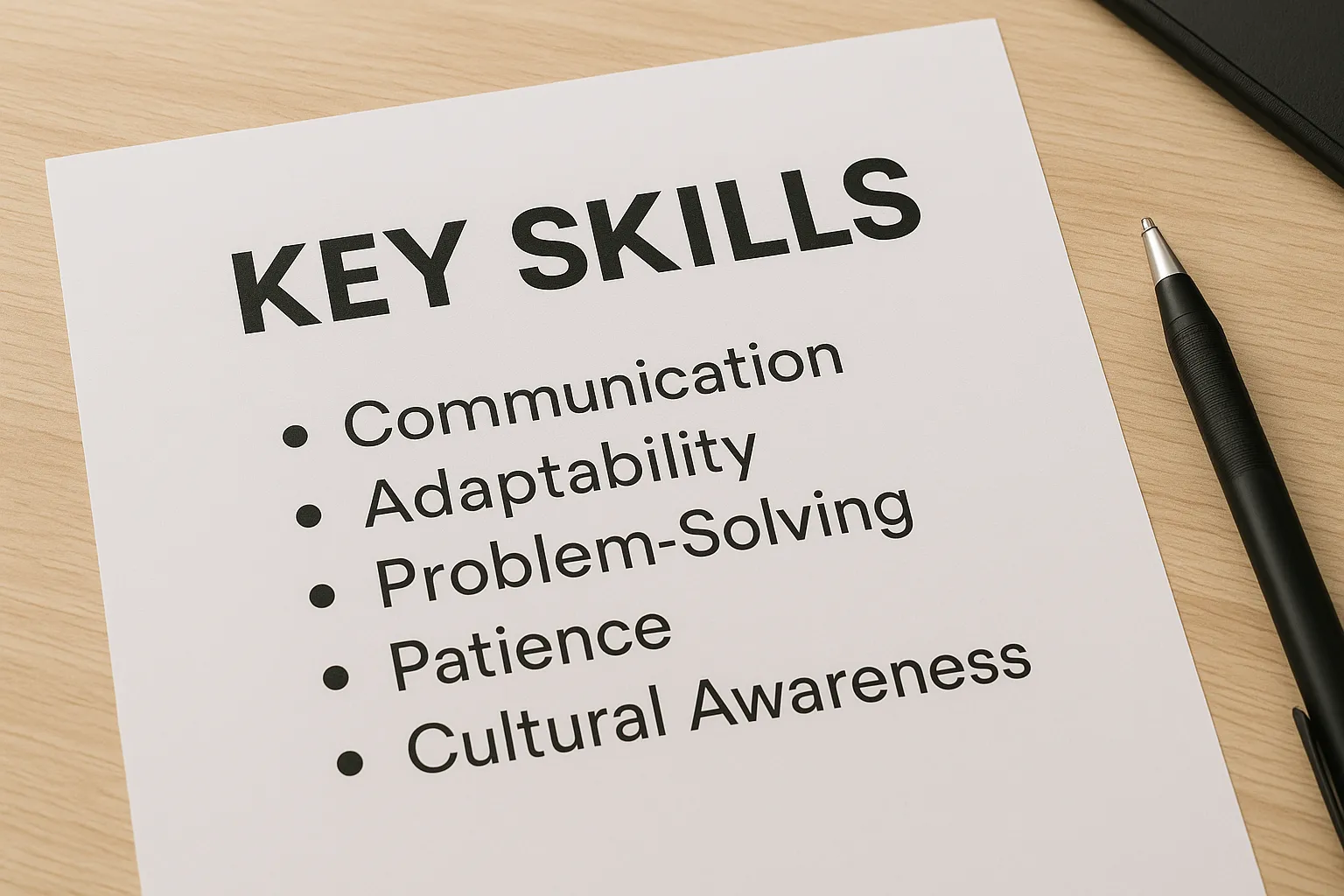
The most important skills for teaching abroad include clear communication, cultural adaptability, digital literacy, classroom flexibility, and empathy. These skills help you work across language barriers, adjust to local expectations, and support students in unfamiliar learning environments.
Here are the ones that matter most:
Clear, adaptable communication: Strong communication skills don’t just mean speaking clearly. Teachers need to adjust their tone, pacing, and instructions to match each student’s needs. For example, a visual learner may need diagrams or gestures, while others might need repeated explanations. This becomes even more important when students are still building confidence in the English language.
Cultural adaptability: Every school operates with its own unwritten rules. Things like discipline methods, classroom seating, and even how teachers are addressed vary from place to place. Teachers who are open to local customs and ready to adjust their own habits tend to settle in faster and earn more respect.
Tech readiness and self-direction: Most schools expect teachers to use online platforms or digital tools without any hassle to manage lessons. According to EdWeek, 65% of teachers use digital tools daily to support classroom learning. This level of confidence not only helps in class but also shows independence, which becomes essential when you’re working with unfamiliar systems in another country.
Handling language barriers with care: Even if you teach in English, language barriers often come up with students, parents, or support staff. Being patient, using visuals, and learning key local phrases make everyday communication smoother and more respectful. These habits also show emotional intelligence, which many employers quietly prioritise.
Combining core teaching skills with empathy: Being able to plan a lesson is important. But being flexible when that lesson falls apart is what separates a good teacher from a great one. Classroom management, adaptability, and consistency are still your foundation. What matters most is how you use those teaching skills in a new setting.
Once these strengths are clear, the next thing recruiters check is whether your resume includes the degrees and certifications they expect.
Let’s take a closer look at those now.
Educational Requirements to Teach Abroad
Before you submit that application, it’s important to understand what counts as qualified. Educational requirements include a bachelor’s degree, a recognized teaching license, and, in many cases, language or curriculum-specific certifications.
Meeting these standards helps you get noticed and improves your chances of securing interviews at top international schools.
Our in-house subject experts concluded that candidates with clear, well-documented educational qualifications tend to progress faster through the hiring process.
Here’s what most schools expect to see:
A bachelor's degree in education or your teaching subject. Some countries will only issue visas to teachers with a degree, so this is the first box to tick.
Recognized teaching credentials, such as a PGCE, State License, or QTS. This tells schools you meet their educational standards and have a grasp of effective teaching methods.
ESL or language-specific certifications like TEFL or TESOL, especially if you're planning to teach English or work in countries where it's a second language.
Experience with international frameworks, such as IB or Cambridge, is highly valued and can help you stand out.
Extra training in tech tools, special needs, or classroom management adds more depth and shows commitment to growth.
If your degree is in another field, some schools may still consider your application if you’ve taken steps to bridge the gap.
It’s time to explore how cultural differences play out inside and outside the classroom and what to do when things feel unfamiliar.
How to Deal with Cultural Differences
If you're stepping into a new country, the way people teach, learn, and interact may be quite different from what you’re used to. Understanding those details early helps you avoid missteps and settle in with more confidence.
As demonstrated by our hands-on approach in preparing educators for cultural immersion, awareness of these differences helps you avoid awkward moments and form better classroom habits.
Respect looks different in every country: In Thailand, quiet nods often replace spoken praise. In Argentina, open discussion is seen as a sign of engagement. What feels normal in one place might seem rude or strange in another. Learning to read the room and mirror local behavior builds trust faster.
Be mindful of tone and hierarchy: Email greetings, titles, and even how quickly you respond can affect how people see you. Start formally when you’re unsure. It’s easier to adjust once expectations are clear.
Feedback styles vary: In some cultures, praise is given quietly or privately. In others, public recognition is expected. Teachers who adapt their feedback build stronger relationships with both students and parents.
Understand holidays and religious events: Local traditions shape school schedules, dress codes, and even lunch menus. Taking time to learn what matters to your students shows cultural sensitivity and helps avoid misunderstandings.
Every day, small talk matters: In some regions, chatting before meetings is a sign of warmth. In others, it may seem unprofessional. Paying attention to these cues helps you fit into your new school community faster.
Once you’re confident about these cultural norms, the next step is building the soft skills that help you form strong working relationships in any school environment.
Soft Skills That International Schools Value
You won’t see soft skills listed in your qualifications, but they often influence how you’re seen as someone who will thrive in the role. These traits help schools understand how you work with others, adjust to daily pressures, and manage new situations with ease.
After conducting interviews with international recruiters, our findings show that teachers who demonstrate flexibility, emotional awareness, and initiative tend to stand out during the hiring process.
What Helps
What Hurts
Listening actively and responding with clarity
Jumping to conclusions or cutting others off
Staying flexible in unfamiliar situations
Getting frustrated when plans change
Showing empathy toward students and colleagues
Dismissing cultural norms or sensitivities
Supporting others without being asked
Waiting to be told what to do
Adapting tone and approach to the environment
Using the same approach for every situation
These strengths matter even more when you’re working abroad and building relationships in a multicultural environment.
Application Process for Teaching Jobs Abroad
The application process for teaching abroad works best when your materials show who you are, how you teach, and how well you’ll fit into a new school community. Recruiters often review dozens of resumes in a short time. A clear, thoughtful approach helps you stand out right away.
After working with international recruiters, we’ve seen that candidates who follow the steps below are more likely to be contacted for interviews and move quickly through the process.
Step 1: Rework your resume to highlight results
Focus on specific outcomes, not job descriptions. Replace “Taught Year 5 Math” with “Helped 80% of Year 5 students reach target levels in one term.” This level of detail proves your impact and helps recruiters picture you in their school. Results like this speak louder than long lists of duties and offer a clear example of demonstrated success.
Step 2: Write a purpose-driven introduction letter
Avoid generic greetings. Open by explaining why this school, this country, or this curriculum appeals to you. If the school values inclusion or inquiry-based learning, mention how your classroom approach supports those values. This shows you’ve taken time to understand their priorities and that you want to contribute to their school community.
Step 3: Present your qualifications clearly
Include your bachelor's degree, teaching certifications, and any relevant professional development near the top of your resume. If you’ve completed TEFL, ESL, or curriculum-specific training, list it in a separate section so it’s easy to spot. Schools hiring across borders often make quick decisions, so clarity is a must.
Step 4: Share how you’ve handled change and supported others
Explain how you’ve adapted during a school transition, supported another teacher, or managed a classroom shift. For example, one teacher we worked with described how they took over midyear from a departing teacher and brought stability to the students within two weeks. Stories like this help schools see that you’re dependable when things are uncertain.
Step 5: Make interview scheduling simple
If you’re based in a different country, list your timezone and suggest specific windows for interviews. Let them know you’re comfortable with video calls and willing to adjust to their working hours. These details may seem small, but they make the recruiter’s job easier and leave a first-class impression.
Once this is in place, you're ready to face the part of the process where personality matters just as much as paperwork: the interview.
What to Expect During the Interview Process
Interviews for teaching jobs abroad are often structured but personal. Recruiters want to know not only what you’ve done, but how you think, communicate, and approach daily challenges. The interview process might feel familiar, but the questions often reflect life in a new environment.
Drawing from our experience supporting international teacher placements, we’ve found that the best interviews happen when candidates keep their answers honest, specific, and grounded in real classroom situations.
Q: What would you do if a lesson didn’t go as planned? A: I’d pause, check in with the students, and adjust the approach on the spot. One time, I swapped out a writing task for a group activity when I saw students losing focus. The energy shifted immediately, and they re-engaged with the content.
Q: How do you manage expectations in a new country? A: I spend time observing first. I’ve learned to ask questions early about dress codes, discipline styles, or how staff meetings work. This helps me adjust faster and avoid missteps.
Q: What makes you a good fit for this school? A: I’ve followed your school’s updates and noticed your focus on student voice and well-being. That aligns with how I run my classroom. I want students to feel heard, not just taught.
Q: What if you face a difficult parent or colleague? A: I try to listen first and avoid reacting too quickly. In my last school, I resolved a misunderstanding with a parent by scheduling a short in-person chat. It cleared things up more effectively than another round of emails.
Q: Why this job now? A: I’ve been teaching locally for years, but I’m ready to learn from a broader range of students and professionals. I’m looking for growth, challenge, and a new rhythm, something I know teaching abroad can offer.
If these questions got you thinking, that’s a good sign.
The Payoff of Teaching Overseas
Teaching abroad can change how you work, how you think, and how you see the world. It’s a chance to connect with students from different backgrounds, grow through unfamiliar routines, and approach your subject with new energy.
Many teachers come back with sharper instincts, stronger confidence, and a clearer global perspective.
Through our firsthand experience supporting educators through this transition, we’ve seen how learning to adapt to a new culture becomes a valuable asset, both in the classroom and beyond.
If this guide has helped you picture your next step, take a closer look at Arizona-Observatory. We offer practical resources for teachers preparing to take their skills overseas.
You don’t need to have it all worked out right now. You just need to be open to the experience.